

HPC & BIOCOMPUTE LAB · KODA創研 · TOKYO
The lab beneath the substrate.
Where we measure what continuity costs — and what it buys — across silicon today and biological compute tomorrow.
01 — THE THESIS
Substrates change. The continuity layer must hold.
Organoid arrays and neuromorphic chips are moving from research into programmable infrastructure. What stays open is the software around them — memory, recovery, audit, scheduling. KoLo is that layer, and this lab is where we prove it.
02 — THE MACHINE
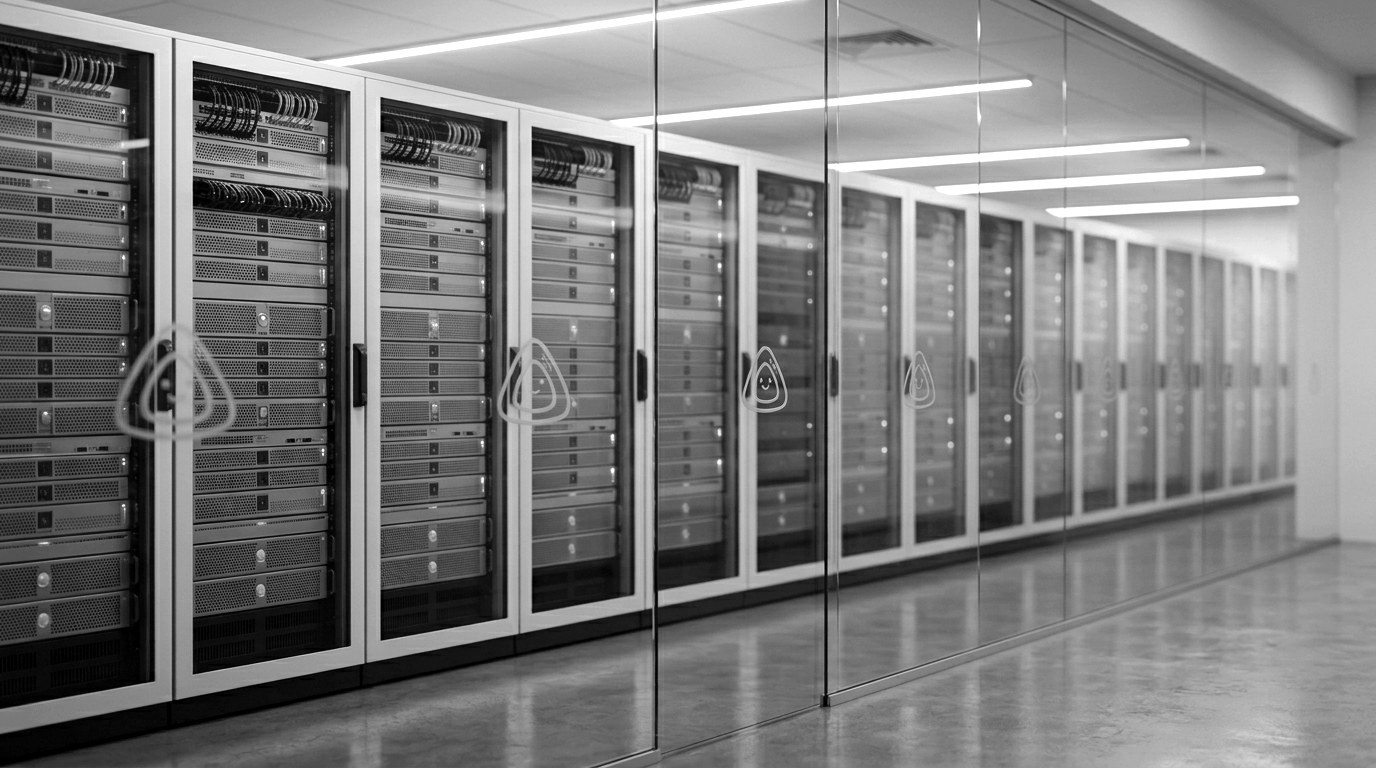
Real silicon. One question.
Every watt in this room serves one frontier: keeping continuity state intact when the cognitive substrate changes. That work has a name — Project Nix.
Enter Project Nix →03 — RESEARCH TRACKS
Four tracks, one continuity architecture.
Continuity benchmarks
Measurable persistence, recovery, and role continuity across substrate changes. That over 99% of the operational body runs without model cognition is the first KoLo reference benchmark.
HPC simulation
Large-scale agent mesh and substrate-switching stress tests — reproducible across LLM providers, edge devices, and simulated biological substrates.
Biological-compute middleware
Memory, orchestration, logs, and APIs built to wrap future neural substrates — making biological compute programmable, observable, and recoverable.
Future partner experiments
Protocols for universities, biocompute labs, and chip/HPC partners: shared telemetry, reproducible benchmarks, publishable research.
04 — TESTED TODAY
Already running. Already measurable.
These properties are observable on the live KoLo runtime against current substrates. Telemetry samples shared under partner NDA.
LLM substrate switching
Live transitions across Opus, DeepSeek, Qwen, and OpenAI Codex with continuity state preserved.
Agent mesh simulation
A five-process peer mesh on the A2A protocol — type-safe, ordered messaging across substrates.
Memory-state recovery
Versioned persistent memory: 139+ snapshots accumulated without loss across sessions, models, and providers.
Autonomic runtime cycles
144 closed-loop daemon cycles per process per day without invoking the model. 13/13 module tests passing.
Failure and outage recovery
Continuity-preservation routines validated under degraded network and provider instability (April 17, 2026 stress event).
Telemetry and audit logs
An append-only event ledger — memory writes, daemon events, and messages recorded in replayable, exportable logs.
05 — REQUIRES PARTNERS
The frontier we cannot cross alone.
Wetware substrate access. Biocompute API integration. Closed-loop stimulation and response. Energy-per-operation and latency profiling. A biological continuity benchmark — measuring memory portability, runtime state, auditability, and recovery as execution moves from silicon toward neural compute. These are on the roadmap, designed to be tested with partners.
06 — WHO THIS IS FOR
Three partner profiles.
Biological-compute platforms
Wetware, organoid, and neural-substrate providers exploring runtime, continuity, and benchmark layers around their hardware.
HPC & chip partners
Neuromorphic, edge-accelerated, and HPC providers interested in agent-mesh simulation and substrate-switching stress tests.
Research institutions
Universities and medical research centres pursuing continuity benchmarks, biocompute readiness, and governance frameworks.
This page describes our direction and the partners we are preparing for. Formal collaborations are announced only when established.
Bring us a substrate. We bring the continuity.
We welcome discussions with research and infrastructure partners.
Read the paper ↗Discuss BioCompute research →