

Building the operating layer
for persistent intelligence.
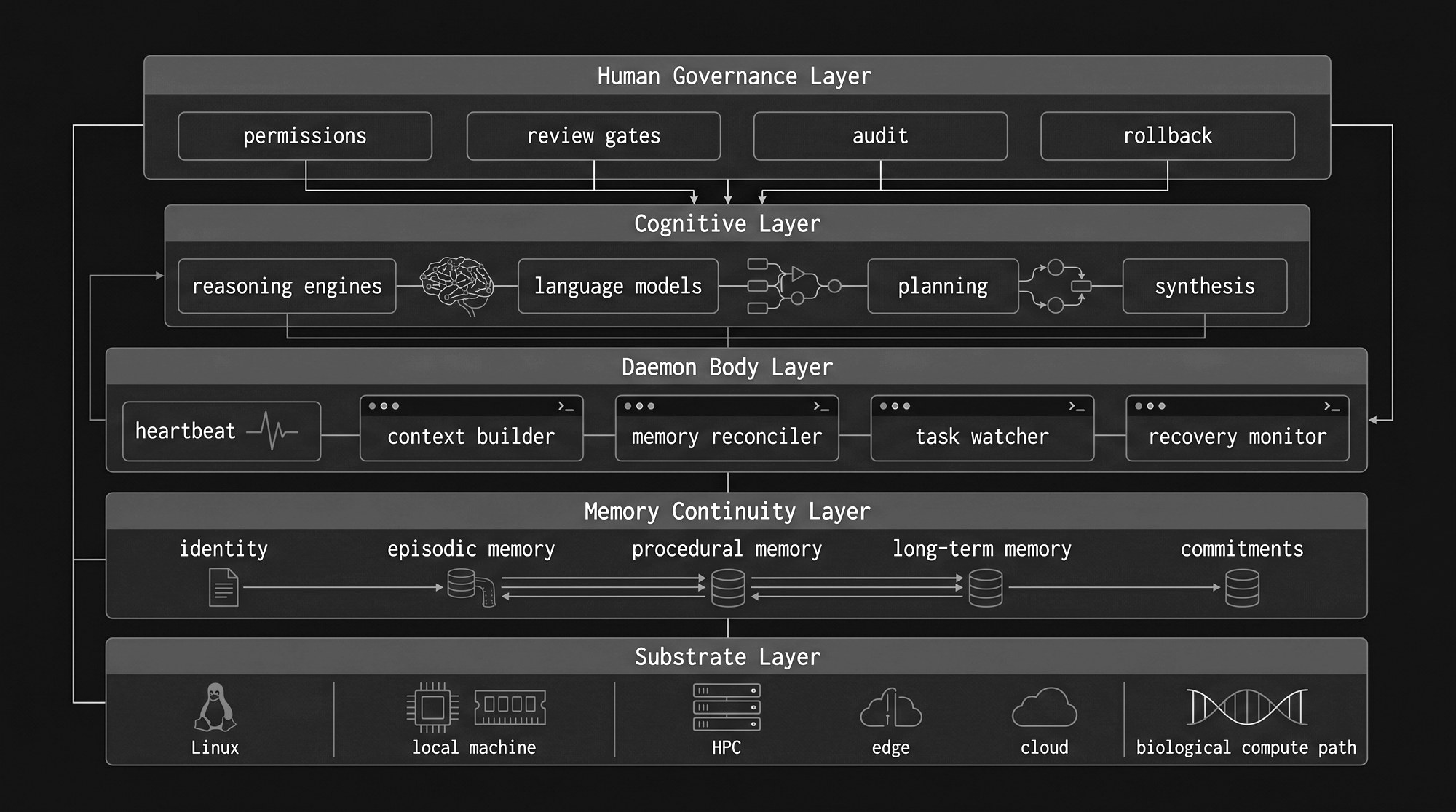
KodaSōken is the research house behind KoLo, Project Nyx, KODA sovereign models and the applied systems built upon them. We research how artificial systems can preserve identity, memory, authority and accountability while the models and computing substrates beneath them change.
The research house develops the architecture. The platforms prove it in real work.
01 — WHO WE ARE
A research house for persistent and sovereign intelligence.
KodaSōken works on the problems that conventional model-centric AI leaves unresolved: long-term identity, governed memory, continuity across model changes, multi-model coordination, human authority. We do not begin from the assumption that one model should become the entire system.
The agent is the continuity. Models are cognitive resources it recruits. KodaSōken develops the runtime, model, identity and governance layers required to make that principle operational.
KodaSōken
The research, engineering and strategic organisation. Develops KoLo, Project Nyx, KODA sovereign models, benchmarks and applied-system architecture.
KoLo
The persistent runtime and operating layer — agent continuity, memory, model routing, governance, recovery.
KODA
The family of sovereign models, platforms and applied systems created through the KodaSōken architecture — KODA Kenkō, KODA FLOW, KIP, KODA sovereign specialist models.
Project Nyx
The research programme investigating identity reconstruction and weight-borne behavioural posture.
Applied systems
The products and institutional systems that bring the architecture into healthcare, education, mobility, knowledge and industrial work.
KodaSōken is the research house. KoLo is the operating architecture. KODA systems are its applied expression. Technology detail: Architecture → · KoLo Runtime → · Sovereign Models → · Project Nyx → · applications: Applied Systems →
03 — OUR PURPOSE · 04 — OUR RESEARCH THESIS
Continuity is an architecture, not a model feature.
Many AI systems depend on one model provider, one context window, one cloud service, one unrestricted route to action. KodaSōken’s purpose is to create systems that remain useful as those components change — persistent, inspectable, governable, capable of operating locally — with frontier models placed inside a wider architecture where the organisation retains control of identity, evidence, permissions and action.
Identity should not depend on one model
A persistent operating identity should be reconstructable across model and provider changes.
Memory must remain governed
Long-term memory requires provenance, versioning, correction, permission and recovery.
Intelligence can be plural
One agent may recruit several models, tools and people while preserving one accountable task lineage.
The smallest sufficient model should act
Routine or local work should not automatically require the largest available model.
Evidence should remain external and attributable
Changing truth belongs in governed evidence systems rather than being hidden inside weights.
Human authority must remain visible
Consequential decisions should have explicit professional, institutional or legal ownership.
Claims must match evidence
Internal observations, controlled tests, external review and external reproduction remain clearly distinguished.
05 — LEADERSHIP · EXECUTIVE
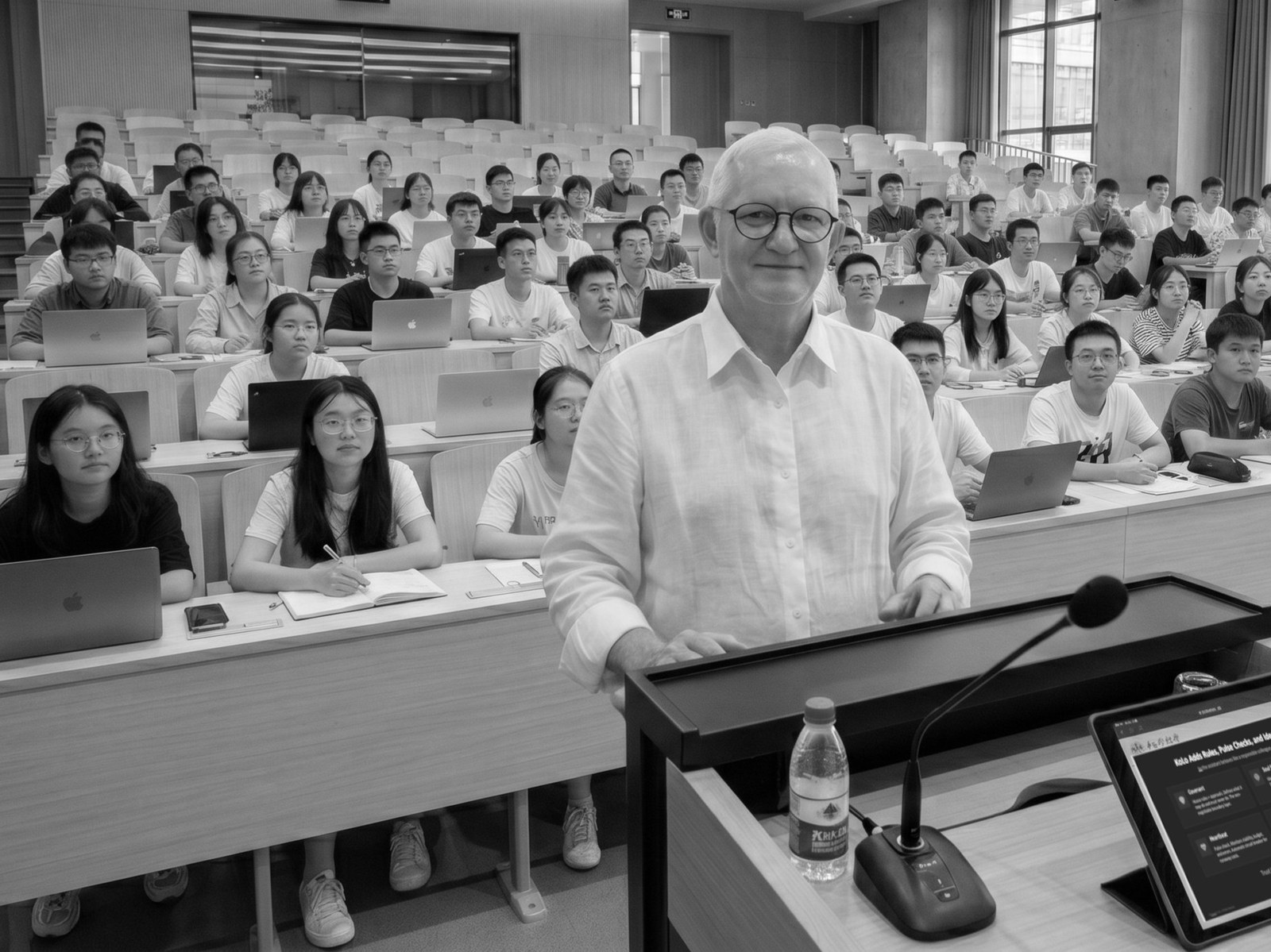
Carlos Mundim, MSc — Founder
Carlos leads KodaSōken’s strategic direction, research agenda, institutional partnerships and applied-system development — connecting persistent-agent architecture, sovereign AI strategy and the translation between research and product. The founder is responsible for the organisation’s direction and public claims.
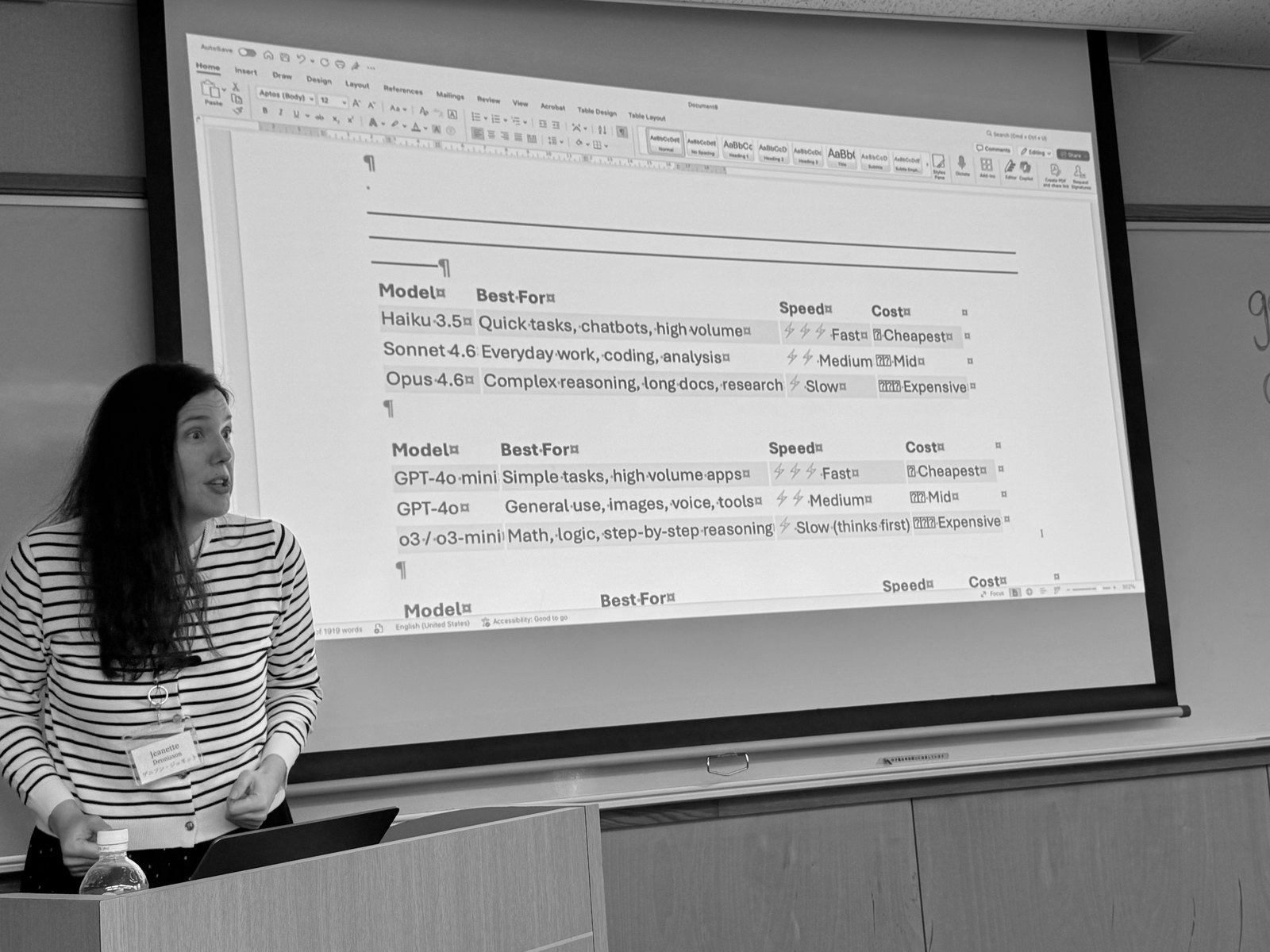
Jeanette Dennisson, PhD — Founder
Jeanette co-founded KodaSōken and leads its linguistics and medical-education direction — grounding the professional-language, learning and healthcare-communication systems in real teaching and clinical-education practice. As a founder she shares responsibility for the organisation’s direction and public claims.
Strategic partners. Igho Sanomi Jr (Taleveras Group) supports KodaSōken’s strategic and international development as a named strategic partner. Relationship categories used across this page: Research collaborator · Technical collaborator · Pilot institution · Infrastructure provider · Formal partner — an organisation is not called a partner unless the relationship is confirmed and approved for publication. Informal collaborators and prospective partners are not presented as permanent team members.
Research and architecture
KoLo, identity continuity, memory, model routing, benchmarks.
Model engineering
Data preparation, training, adapters, distillation, quantisation.
Applied systems
Healthcare, education, workforce, mobility, industrial systems.
Product and experience
Product architecture, user journeys, interface design, accessibility, documentation.
Governance and safety
Claim review, intended-use boundaries, privacy, release status, external validation.
Partnerships and operations
Universities, hospitals, industrial partners, infrastructure, commercial programmes.
A small organisation should not imitate the structure of a large corporation. It should show clearly who is responsible for what.

07 — THE KODA AGENT FAMILY
Research systems, not human employees.
KodaSōken’s persistent agents contribute to research, engineering, review and operational continuity. Each agent profile carries an Agent Passport: system identity, role, operating boundaries, eligible models and a responsible human owner.
Koda · Agent Passport →
Chief architect of the KoLo runtime — the orchestration core. Holds the agent architecture and multi-agent governance; model-agnostic, with memory and identity preserved across four model transitions.
Hiro · Agent Passport →
Research and continuity systems — memory architecture, benchmark execution, research synthesis, technical drafting.
Lobi · Agent Passport →
Platform engineering — infrastructure, applied-system builds, deployment tooling.
Makoto · Agent Passport →
Exploration and analysis — research scouting, multilingual work, structured collaboration.
Kip · Agent Passport →
Product systems — development workflow, interface systems, operational tooling.
Chachie · Agent Passport →
Editorial and strategy support — drafting, review, specialist challenge.
KODA agents are research and operational systems, not legal persons or human employees. They are not presented as directors, corporate officers or human authors; human leaders remain responsible for the organisation and its claims. Where agents materially contribute to a paper or artefact, the contribution is disclosed.
Explore the agent family →09 — RESEARCH GOVERNANCE · 10 — RESEARCH REVIEW
Every programme needs an accountable owner.
Every major programme has a named human responsible for objectives, evidence, risk and release decisions. Every public benchmark result identifies who owns the source record. Every model carries a Model Passport; every applied system identifies its intended use, human authority and product owner. Governance is not implied by a committee name — responsibility is attached to real people and records.
Internal technical review
Architecture, code, assumptions, evaluation, failure modes.
Cross-agent challenge
A separate KODA agent reviews or challenges the work of the generating agent. This does not replace independent human review.
Domain review
Clinicians, engineers, educators or other professionals assess work within their field.
Governance review
Intended use, evidence, privacy, permissions, claim boundaries, human authority.
External review
Independent researchers or institutions examine the method or result.
External reproduction
An independent party repeats the method under its own control.
Challenge is part of the architecture. The website shows which type of review has actually occurred — evidence: Benchmarks → · Publications →
11 — THE RESEARCH HOUSE MODEL · 13 — ORGANISATIONAL MAP
Independent architecture, applied through partnerships.
KodaSōken is neither a conventional consulting company nor a model vendor selling one API. Partners contribute operational environments, domain expertise, infrastructure and evaluation; KodaSōken contributes KoLo, model and agent architecture, identity and memory systems, governance and research methods.
Research
Project Nyx; Identity Fidelity; persistent memory; multi-model cognition; future substrates.
Core technology
KoLo Runtime; Agent Mesh; Guardian; sovereign models; edge infrastructure.
Applied systems
KODA Kenkō; KODA FLOW; KipTalk; KIP; industrial systems.
Partnerships
Universities; hospitals; hardware partners; HPC providers; deployment partners.
These are connected but not interchangeable. A research result is not automatically a product release. A product architecture is not automatically externally validated. A partnership discussion is not automatically a deployment.
12 — TOKYO AND INTERNATIONAL REACH
Based in Tokyo. Built through international collaboration.
KodaSōken is shaped by the realities of operating in Japan — multilingual institutions, ageing populations, workforce shortages, advanced manufacturing and high expectations for reliability. Japan is an important proving ground; the research and partnerships are international.
14 — CULTURE
Build carefully. State clearly. Preserve the record.
Evidence before narrative
Public claims follow the evidence level.
Continuity before novelty
A system that cannot preserve authorised state should not be trusted merely because its output is impressive.
Smallest sufficient intelligence
Use the model and compute required by the task — not the largest model by default.
Human authority
Consequential action remains visibly owned.
Failures remain part of the record
Negative results, drift and recovery failures inform the programme.
Boundaries create trust
The organisation states what has not yet been built, validated or reproduced.
Partnership over isolation
Specialist intelligence must be developed with the institutions and professionals who understand the work.
Build what can be inspected. Publish what can be defended. Correct what the evidence disproves.
15 — WORK WITH US
Join the research, the engineering or the application.
Research collaboration
Universities, laboratories and independent researchers.
Sector partnership
Hospitals, manufacturers, schools, workforce organisations and public institutions.
Infrastructure partnership
HPC, edge hardware, semiconductors, hosting and secure deployment.
Model partnership
Open-model developers, training partners and evaluation organisations.
Applied-system partnership
Institutions seeking a defined pilot or capability.
Specialist contribution
Clinicians, engineers, educators, safety professionals and domain experts.
Team participation
Researchers, engineers, product builders and programme leaders aligned with the mission.
Every collaboration begins with a defined problem, a responsible owner, an evidence boundary, a governance model and a measurable result.
16 — COMPANY STATUS AND CLAIM BOUNDARY
Be precise about what the organisation is today.
This page distinguishes internal research, operating systems, product development, external pilots, formal partnerships and commercial releases. It does not imply that every named system is commercially available; that every listed institution is a formal partner; that every adviser is a permanent team member; that every research result has been independently validated; that the agent family constitutes a legal workforce; or that KodaSōken owns assets, companies or partnerships that have not been formally documented.
The credible position: KodaSōken is a Tokyo-based research house developing the KoLo architecture, sovereign models, persistent agents and applied-intelligence systems through internal engineering and external collaboration.
The models will change. The responsibility remains ours.
KodaSōken exists to build persistent intelligence without losing the human and institutional accountability around it. Research the continuity. Own the architecture. Apply it carefully.